


Micheletti (Gh) Limited seeks applications for qualified candidates to fill the position of a Quality Control Officer/Civils/Buildings & General Construction Key requirements: 1. Applicant to be a Civil Engineer/Architect registered with GhIE or GIA. 2, Candidate must posses at least 5 years’ experience and proven exposure on same position. 3. Applicant must have his own vehicle 4. Employment on Projects in Accra/Tema/Greater Accra Region Submit applications to: jobs@michelettighana.com Submissions’ deadline is 30 June 2026
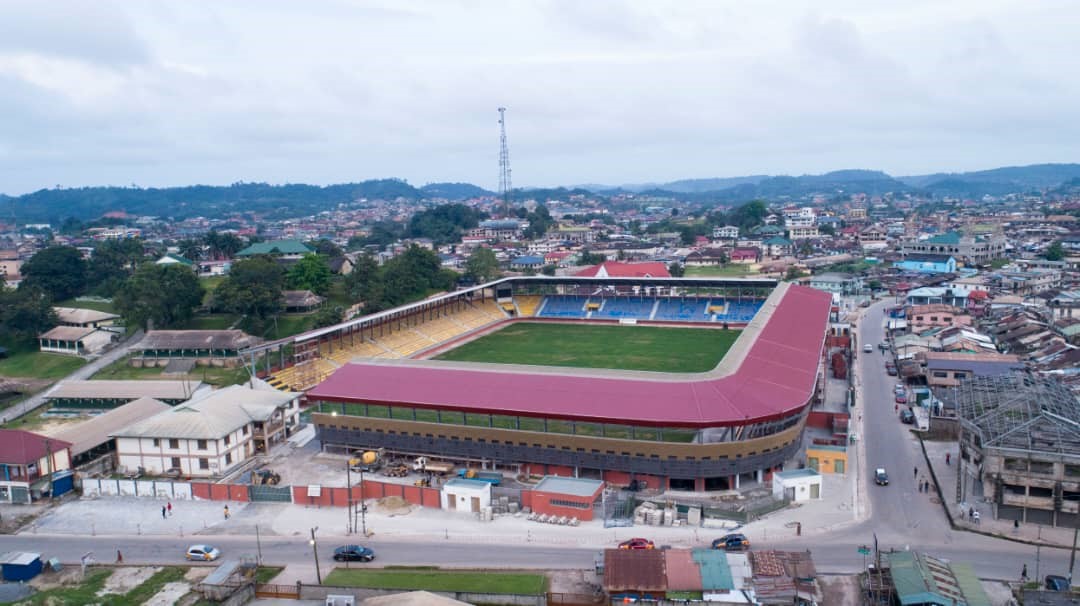
President John Dramani Mahama, in his first media encounter to account for the first eight to nine months of his administration, recently singled out Gold Fields Foundation’s legacy project, the Tarkwa and Aboso Sports Stadium, popularly known as ‘T & A Park,’ for praise. His recognition was not accidental. He cited the facility as a model of cost efficiency in sports infrastructure delivery, contrasting it sharply with the ballooning costs of state-led projects. Responding to a question on sports infrastructure during the encounter, the President pointed to the Tarkwa Gold Fields Stadium as an example of prudent investment. “Tarkwa Gold Fields built a standard stadium for their football activities, and I was surprised to learn it cost about US$13 million,” he said, adding, “When the Government of Ghana built a stadium, it cost hundreds of millions of dollars. Those of you who have been to Tarkwa and have seen the stadium, it’s a standard stadium, and it takes about 10,000 people.” His conclusion was simple: if Gold Fields could achieve such results at US$13 million, government must be able to do the same. The facts, however, show that the reconstructed T & A Stadium, with a 8,400-seating capacity and international-standard amenities, was completed at US$16.2 million by the Gold Fields Ghana Foundation. Even so, the cost remains modest by global and local benchmarks. The facility is already positioning Tarkwa as a football hub in the Western Region, nurturing youth talent and serving as the home ground for Medeama Sporting Club, the premier league team sponsored by Gold Fields. This project also illustrates the unique funding model behind Gold Fields Ghana Foundation, which is financed through US$1 per ounce of gold produced, 1.5 percent of pre-tax profits, and proceeds from scrap materials from its Tarkwa and Damang mines. Since inception, the Foundation has invested more than US$105 million in education, healthcare, infrastructure, agriculture, and enterprise development. The stadium is only one among many interventions, not to mention the 33 kilometers Tarkwa-Damang roads constructed at a cost of US$27 million. The Senior Vice President and Managing Director of Gold Fields Ghana, Eliot Twum, earlier this year revealed at a mining conference in Accra that another legacy project is underway: a modern medical and clinical hub to replace Tarkwa’s aging Apinto Hospital, Ghana’s first government hospital. “These are some of the things we are doing in our communities,” he explained. “The idea is to leave an enduring legacy. We don’t know when we will leave, but when we do, we want to ensure our communities are better off than when we arrived.” Such commitments go beyond philanthropy. They reflect Gold Fields’ long-term presence and strategic positioning in Ghana since 1993, when it acquired the then state-owned Tarkwa mine, later expanding to Damang in 2002. The company today operates both mines with a 90 percent stake, leaving the government with 10 percent carried interest. While Damang’s mining lease, which expired this year, has been extended for only 12 months on a non-renewable basis, Gold Fields’ economic footprint remains substantial. In 2024, the company contributed about GH₵4.4 billion (US$295 million) to the state, including GH₵2.6 billion in corporate income tax, GH₵337 million in PAYE, and GH₵355 million in dividends. For the first half of 2025 alone, its payments exceeded GH₵3.2 billion, GH₵1.6 billion in corporate tax, GH₵587 million in royalties, GH₵185 million in PAYE, GH₵506 million in dividends, GH₵295 million in withholding tax, and GH₵121 million in withholding VAT. These are not marginal contributions; they underscore the mining sector’s direct relevance to Ghana’s fiscal health. Yet, despite such evidence, misconceptions persist about the value of mining to national development. Here lies the importance of President Mahama’s public recognition. His endorsement affirms not only the tangible benefits of corporate social investments but also the efficiency gains possible when the private sector complements state efforts. This recognition also feeds into an ongoing policy debate. The Ghana Chamber of Mines has consistently argued that Corporate Social Investments (CSIs) should remain voluntary, as currently captured in the Minerals and Mining Act (Act 703), while being guided by structured frameworks and partnerships. However, the Minerals Commission is pushing reforms to make Community Development Agreements (CDAs) mandatory, with a levy of 1 percent of gross mineral revenue. The regulator contends that such a levy would formalise existing CSR expenditures and align Ghana with international practice. The Chamber of Mines, on the other hand, warns that this approach risks unintended consequences. Mandatory CDAs could stifle innovation and reduce flexibility in how companies design projects for their host communities. Worse still, they may overburden marginal mines with weak financials, increase Ghana’s relative tax burden compared to peer jurisdictions, and ultimately deter investment in a sector the country relies heavily on. President Mahama’s remarks, therefore, come at a critical time. They demonstrate that mining companies are already making meaningful contributions, both fiscally and socially, without compulsion. Imposing additional levies risks undermining precisely the kinds of initiatives, like the Tarkwa stadium and the planned hospital, that communities value most. Ghana must tread carefully. The lesson from Tarkwa is not only that the private sector can deliver world-class infrastructure at a fraction of the state’s cost, but also that corporate social investments thrive best in an environment of partnership, not compulsion. Government should, therefore, channel its energies into creating a policy framework that enhances transparency, accountability, and collaboration, rather than mandating rigid levies that could erode goodwill. The Tarkwa stadium is a symbol of what can be achieved when efficiency, partnership, and community development intersect. If government truly wishes to replicate this success, it must learn to spend like Gold Fields, and resist the temptation to legislate generosity into obligation. Source: thebftonline.com | September 15, 2025

Accra’s Kotoka International Airport (KIA) enclave has undergone a remarkable transformation over the past two decades, in line with growth in the aviation and hospitality sub-sectors. Indeed, successful execution of the Airport City 1 project by Ghana Airports Company transformed the national capital’s skyline. Airport City One is now home to major architectural masterpieces and is one of the most sought-after business districts in the capital. Atlantic Towers, Nester Square, Holiday Inn Hotel, SSNIT Emporium, the Marina Mall, National Communications Authority (NCA) building, Vodafone and UT Towers, Silver Star Towers and One Airport Square, among others, are some of the major developments at Airport City One. The expected construction of a new development, christened Prestige – on 2.88 acres of land adjacent to the Airport Shell Fuel Station and directly opposite the Marina Mall – by a private developer is also set to add to the Airport skyline’s beauty, redefine luxury-living in Ghana’s capital and play a key role in increasing the country’s tourism receipts. Youssef Aitour, Co-Founder and Managing Director-i2 Development Ghana Limited, the project’s developer, confirmed that an official launch of the project is slated for December 13, 2023. The importance of modern, sustainable plush offices, residential properties and hotels within the Kotoka International Airport vicinity, and indeed near major airports in Africa, cannot be overstated when it comes to the growth of tourism, aviation, and allied businesses. These properties play a crucial role in supporting and attracting visitors, facilitating travel and fostering economic development. Placing plush residential properties and hotels near airports provides convenient and easy access for travellers. This accessibility allows tourists, business travellers and aviation professionals to conveniently stay close to the airport – saving time and reducing travel-related stress. This proximity encourages more visitors to explore Ghana as they can easily reach their accommodations upon arrival, resulting in increased tourism and economic growth. These developments are in sync with the investment in on-ground airport infrastructure at Kotoka International Airport. The flagship Terminal 3 can handle five (5) million passengers a year. Last year, passenger throughput was a little over 1.8 million and is expected to increase this year. In 2022, Ghana realised US$2billon in tourism revenue, with a projected end-year 2023 tourism revenue of US$3.4billion. Over half a million visitors have been recorded for first-half of this year by the tourism sector regulator, Ghana Tourism Authority (GTA). The Authority projects total arrivals of 1.2 million by end of the year. All these visitors and the many expatriates, business leaders and entrepreneurs desiring to live in the heart of Airport City, with access to world-class amenities and impeccably designed residential spaces, will benefit a great deal from completion of the Prestige project. This will improve the visitor experience, as modern and plush properties like what is planned with Prestige offer a wide range of amenities and services which ensure a pleasant and memorable experience for visitors. This positive experience can encourage tourists to go home and recommend the destination to others, boosting growth of the tourism industry. All within reach The Prestige project’s location means all the best Accra has to offer leisure and business travellers is only a few minutes away. From famed shopping malls, restaurants, nightclubs, offices of major international companies operating in Ghana, and of course the Kotoka International Airport, are all within reach – in about 60 seconds. The project is expected to provide the ultimate in luxury living, whether one opts for a studio, one- or two-bedroom or penthouse. The lush, green spaces on the ground, on each of the levels, and the incorporation of sustainable open spaces as part of the Prestige project will create a ‘luxury sanctuary’ within the city for residents and be a pleasure to the eyes of beholders. With the strong choice of the renowned Michelleti and Co. as general contractors, the project’s quality is never in doubt. Casa Trasacco is a preferred partner for the project, and will add the touch of elegance they have come to be known for in each apartment curated within the Prestige. KIA’s improved brand image The availability of sustainable accommodation near airports can attract environmentally-conscious travellers. As sustainability becomes an increasingly important consideration for travellers, the presence of eco-friendly hotels and residences can provide a competitive advantage for airports and their associated travel markets. Moreover, the construction of sustainable residences and hotels can stimulate economic growth by creating job opportunities in the construction, hospitality and service sectors. These developments can employ local communities, thereby supporting the overall aviation and travel markets. In addition to economic benefits, sustainable accommodation can also improve the airport’s reputation and contribute to its corporate social responsibility efforts. This can lead to increased stakeholder trust, positive media attention and a strengthened overall brand image, attracting more airlines and businesses to operate within the airport’s vicinity. Source: BFTOnline.com | October 24, 2023

Works on the US$16.2million renovation and upgrade of Tarkwa and Abosso (T&A) Sports Stadium in the Western Region is about 73 percent complete. The project, which was started in the first quarter of 2020 by Gold Fields Ghana Limited through the Gold Fields Ghana Foundation, is expected to be completed by December 2022. However, the pitch can be used for football matches by the first quarter of 2023. Speaking to the media during a visit to the T&A Park, Roger Adama, Project Manager of Gold Fields Ghana Limited, explained that there have been quarterly meetings with partners since the inception of the project for them to make some inputs. He said the stadium, which currently has a seating capacity of 400, will have 10,400-seat upon completion. “This park meets FIFA’s standard; and international matches can be played here. We have the Presidential and VIP area which is segregated, flood light, electronic score board, standby generators, emergency service areas, FA meeting rooms, press meeting rooms, among others,” he said. He mentioned that 61 percent of the labourers are from the Tarkwa Municipality while, other workers with specialised skills which could not be found in the area were brought from Accra. According to Mr. Adama, 78 percent of the materials for construction, consumables, food, among others were sublet to companies and individuals in Tarkwa. Michelette Company Limited is the one main contractor doing all the works, and Top Technocrats Ghana Limited is the consultant. Other partners are the Tarkwa Nsuaem Municipal Assembly, Sports Council, Churches, Medeama Football Club, Chiefs, and other interested parties. Challenges Among the challenges that have affected the project, are: the COVID-19 lockdown where some of the workers travelled to their various homes; delay in getting hot galvanised steel from off-shore for roofing; and persistent rainfalls at Tarkwa, he noted. He explained that the park will have four stands namely: white, gold, blue and yellow, and there will be stores under some of the stands. Mr. Robert Siaw, Regional Community Relations Manager of Gold Fields said: “After completion, the facility would be managed by stakeholders such as the Municipal Assembly”. Source: B&FT

The Micheletti Company Limited of the Trassaco Group Limited has been adjudged the Green Building Company of the Year at the maiden edition of the 2021 Ghana Construction Industry Excellence Awards (GCIEA). The company was honoured for constructing the One Airport Square located at Airport City which is the first certified Green Building in Accra, Ghana. At the award ceremony held on Friday, September 10, 2021, in Accra, the Managing Director for the company, Mr Ernest Taricone expressed appreciation to the organizers of the awards for recognizing the company’s efforts. According to Mr Taricone, the company will put in more effort in providing outstanding works in the construction sector and contributing to the growth of the country’s economy. “We are honoured to receive this award. I am grateful to the organisers of the awards for the honour bestowed on us. I dedicate the award to my hard-working team for their immense support in making this possible. We are going to work hard to support the construction sector and the country,” he said. Also, at the event, organized by the Ghana Chamber of Construction Industry (GHCCI), 29 other companies and individuals were honoured for their outstanding performances in the construction industry and their contributions to the growth of the country’s economy. The award ceremony was graced by dignitaries including the Vice President of Ghana, Dr. Mahamudu Bawumia, who was the guest of honour, the Minister for Works and Housing, Mr Francis Asenso-Boakye, the President of the Cape Coast House of Chiefs, Odeefo Amoakwa Buadu, the Chief Executive Officer of Private Enterprise Federation, Nana Osei Bonsu, the Chairman of (GHCCI), Surveyor Emmanuel Martey, and players in the construction industry. Event Held on the theme: Creating Competitive Collaborative and Innovative Business Governance for the Construction Industry of Ghana, the award is targeted towards rewarding publicly most distinguished companies, institutions, teams and individual operating in the sector and also serve as a standard for all practitioners to aim at quality production and increase productivity. The Vice President of Ghana, Dr. Bawumia who spoke on behalf of President Nana Akufo Addo commended the awardees for contributing to the growth of the national economy and development. He urged them not to relent in their efforts but to continue to attain higher heights in building a robust national economy for the country. He also indicated that the government has enacted new laws with others in the pipeline to sanitize and regulate the construction industry in order to create an enabling environment for the sector. “There’s a lot of work ongoing in reinforcing the legal framework to help regulate and create an enabling environment for the construction industry”, he said. Awardees Among the 29 awardees were the Minister of Roads & Highways, Mr Kwasi Amoako-Attah, who was declared the Infrastructure Minister of the Year; the Chief Executive Officer for Ghana Cocoa Board, Mr Joseph Boahen Aidoo, who was honoured as the Best SIGA Construction Industry of the Year; the Chief Executive Officer of Private Enterprise Federation, Nana Osei Bonsu emerged as the Outstanding Excellence Leadership of the Year, with the Construction Woman of the Excellence of the Year going to President for Progressive Road Contractors Association, Madam Joana Adjei. The Managing Director for Core Construction Company, who was declared the Overall General Construction Company of the Year, while the Managing Director for Oswal Investment Limited, Mr Humphrey Williams, was honoured with the Innovative Construction Company of the Year. The Associated Consultants Limited led by Ing. Kwabena Bemponga received the Distinguished Construction Design Team of the Year. Micheletti Company Micheletti Company is one of Ghana’s leading Civil Engineering and Building Construction Company whose operations involve planning, designing and building projects. It has been in operations for over 50 years since 1955. The company constructed the first certified Green Building in Accra, Ghana. The One Airport Square located at Airport City was certified through the collaborative efforts of Ghana Building Council (GHGBC) and Green Building Council of South Africa (GBSCA) and received a Four (4) Star design rating on the Green Star Office (V1) Rating Tool in 2015. Source: Graphic Online | Date: Sep – 13 – 2021